The Nocturnal Bestiary
The Still Child
No reports collected on this site yet. See the assessment
- Sleep paralysis
- Nightmare
- Hypnopompic (waking up)
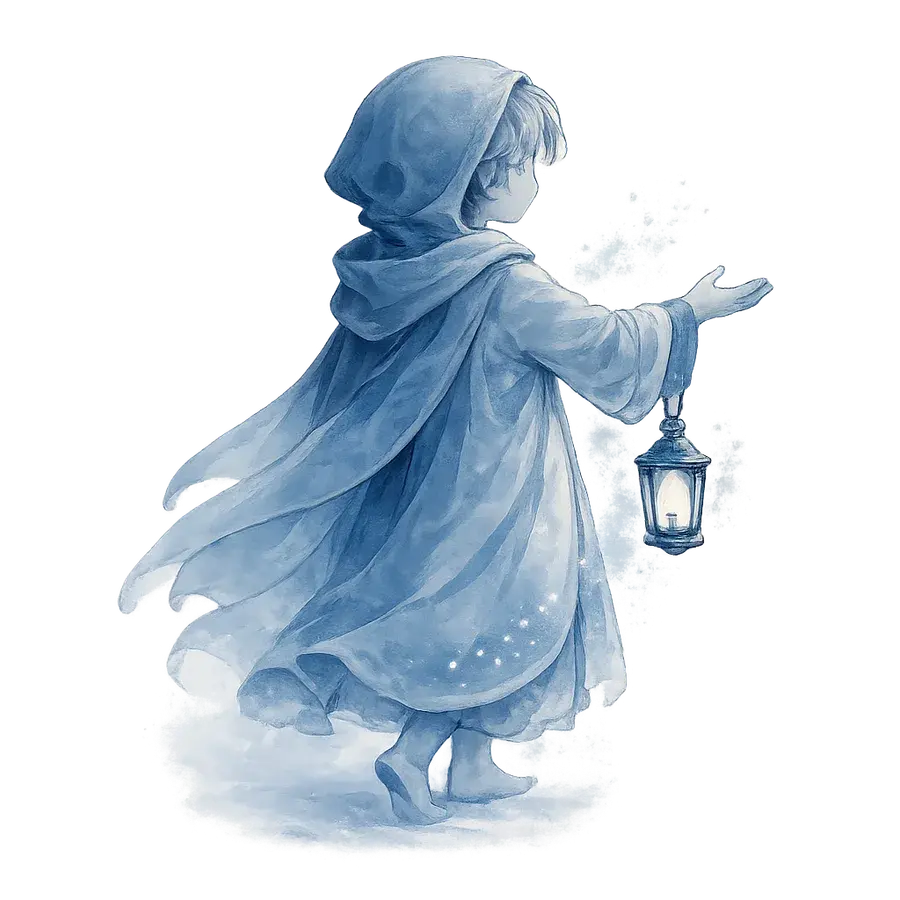
A child-sized figure that does not behave like a child: silent, still, and looking at the dreamer. The unease comes from the mismatch between the shape and the behaviour rather than from anything threatening.
Also called: a child that is not a child, a silent child, a child standing there, a small figure
This is an archive of what people report. A consistent description across independent reports is evidence that an experience recurs. It is not evidence that anything external exists. How this archive is built
The mismatch is the whole of it. Dreamers describe a small figure with a child's proportions doing none of the things a child does: no speech, no movement, no reaction to being looked at.
That combination is reported as more disturbing than a straightforwardly frightening figure would be, and dreamers frequently say so explicitly.
Standing at a distance is the commonest position, and approach is rare.
Some dreamers report recognising the child, occasionally as themselves, which moves those reports towards the doppelganger material.
Editorial assessment
Confidence: emerging.
This is filed above insufficient and below repeated for a specific reason. The reports are consistent in a way that is hard to explain by chance, and specifically consistent on a detail nobody would invent for effect: that the figure is not frightening in the way it should be, and that dreamers feel guilty for being unsettled by it.
That detail is the reason this entry exists. Fictional child figures are menacing; these reports are not, and the divergence from the available cultural template is the most interesting evidence here.
What prevents a higher classification is the sample. It is small, self-selected and monolingual, and the horror confound is real even if the reports diverge from it. emerging says exactly that: worth watching, not yet established.
Typical appearance
Child-sized, correctly proportioned, frequently described as ordinarily dressed. Faces are reported more often than in the other entries here, and are described as blank rather than as absent.
Typical behaviour
Stands and looks. Does not speak, approach or react. The behaviour is the entire source of the unease, and reports emphasise the wrongness of the stillness.
Where it appears
Bedrooms, corridors and doorways most often. A substantial minority are ordinary dreams rather than paralysis experiences, which is why this is not filed as sleep-paralysis-associated.
Common encounter sequence
- Noticing a small figure, usually at a distance or in a doorway.
- Recognition that it is not behaving as a child.
- Sustained looking, on both sides.
- No resolution; the dream ends or the dreamer wakes.
How the dreamer feels
A specific unease that dreamers describe as harder to name than fear. Several report guilt alongside it, at being frightened of a child, which is unusual and worth writing down.
Earliest traceable reports
Child figures with something wrong about them are widespread in folklore, and the changeling material is the best documented. Whether historical accounts describe the same experience as these reports is not establishable, and the archive does not claim it.
Geographic and community spread
Reports are geographically spread but the archive's sample is small and English-language, and horror cinema has used this figure heavily, which is an unquantified confound.
Similarities and differences
Whether the child is felt as threatening varies widely and most reports say it is not, which is the opposite of how it is depicted in fiction. Some dreamers report it as sad rather than frightening, and a few as needing something, which is a considerable range for one figure.
Common associations
- A shape and a behaviour that do not match.
- Stillness, again, as in the corner figure.
- Guilt at being frightened, which is unusual.
- Divergence from fiction, which is the evidence.
Positive readings
A minority of reports are not frightening at all, and those dreamers describe something closer to sadness or to being asked for something.
The Protector archive covers the guiding-child material, which is a separate figure and should not be conflated with this one.
Difficult readings
The unease is real and dreamers frequently find it lingers longer than a straightforward nightmare would.
Where it occurs with paralysis, the sleep-science material applies and is the more useful frame.
Psychological perspectives
A form that signals one set of expectations and behaves against them produces a stronger response than a straightforwardly threatening form, which is the near-human discomfort the doll, mask and monkey entries describe.
A child is an unusually strong signal, so the mismatch is unusually sharp.
The reported guilt is worth flagging as a genuine finding: an emotional response to having had an emotional response is not something dreams usually produce, and it recurs here.
Cultural and historical
Changeling beliefs caused real harm to real children historically, and the archive states that rather than presenting the folklore as charming.
The menacing child of modern horror is a distinct and recent construction, and the fact that these reports diverge from it is the reason the entry is filed as high as it is.
What the sleep science says
Reasonably supported outside dream research: discomfort at forms that signal expectations and violate them.
Well established: sleep paralysis, where a portion of these reports originate.
Not established: any independent existence. The classification is emerging and the assessment says what would be needed to move it.
Your own context
- Did it do anything?
- Was it frightening, and did that surprise you?
- Did you feel guilty for being unsettled?
- Did you recognise it?
If this recurs
Log the emotional tone carefully rather than the appearance. The tone is the variable that carries information in these reports and it is easy to lose.
Emotions often reported
- unease
- guilt
- dread
- melancholy
- confusion
- tenderness
Questions for reflection
These are for your journal, not for us. Nothing you write is shared.
- Did it do anything at all?
- Was I frightened, and did that feel wrong?
- Did I know who it was?
Dream interpretation is subjective. Nothing here is a diagnosis, a prediction, or medical advice.
Sources and reviewed references
4 references. What these labels mean
- 1.Sleep Paralysis and the Structure of Waking-Nightmare HallucinationsPeer-reviewed research
J. Allan Cheyne (2003) · Dreaming
Cited for: The three-factor structure of sleep-paralysis hallucinations (intruder, incubus and vestibular-motor experiences) which accounts for the recurring "presence in the room" and "pressure on the chest" reports.
- 2.The Terror That Comes in the Night: An Experience-Centered Study of Supernatural Assault TraditionsAcademic book
David J. Hufford (1982) · University of Pennsylvania Press
Cited for: The central finding behind this entire archive: that the "old hag" experience shows a stable core description across cultures with no prior exposure to the tradition. That is, the experience generates the folklore rather than the other way round.
- 3.Sleep Paralysis: Night-mares, Nocebos, and the Mind-Body ConnectionAcademic book
Shelley Adler (2011) · Rutgers University Press
Cited for: How culturally specific interpretations attach to a physiologically consistent sleep experience, and what happens when they do.
- 4.The Reinterpretation of Dreams: An Evolutionary Hypothesis of the Function of DreamingPeer-reviewed research
Antti Revonsuo (2000) · Behavioral and Brain Sciences
Cited for: The threat-simulation hypothesis. That the over-representation of threatening content in dreams may be functional rather than incidental.
Encounters
How the still child has actually turned up for other dreamers, in their own words. Add a drawing if you have one. A picture describes a figure in a way that the words on this page have not already shaped.
Nothing here yet. Be the first to say how this has shown up for you.
Specific encounters
The variants people report most often. Each is written from the accounts rather than composed from this page.
Related figures
- SymbolDollDolls produce unease with no threat attached, and the reason is specific: a doll is a face that does not behave like a face. The reports belong with the mask and faceless-person material rather than with objects.
- PersonChildChildren in dreams are reported very differently depending on whether the dreamer has children. For parents they are usually literal and anxious; for others they more often carry vulnerability, potential or the dreamer at that age.
- Dream creatureThe One in the CornerA figure standing in the corner of the bedroom, seen on waking, that does not approach. It is among the most consistently described positions in the sleep paralysis literature and the position itself is the distinctive feature.Sleep-paralysis associated
- Dream protectorThe Guiding ChildA child who leads the dreamer somewhere, calmly and without explanation. Uncommon, distinctive, and reported with an odd absence of the anxiety children usually produce in dreams.Emerging pattern
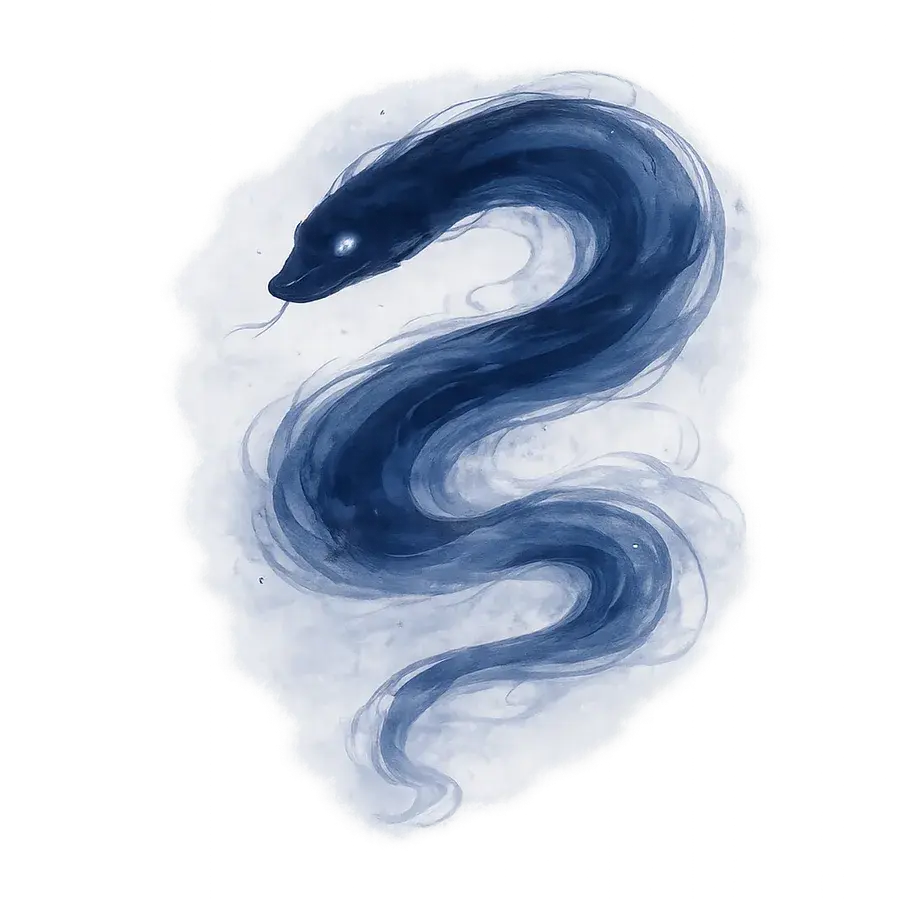
- Dream creatureThe Serpentine PresenceDistinct from an ordinary snake dream: an enormous serpentine form reported as aware, deliberate and of impossible scale. Uncommon, vividly remembered, and reported as awe more often than fear.Emerging pattern
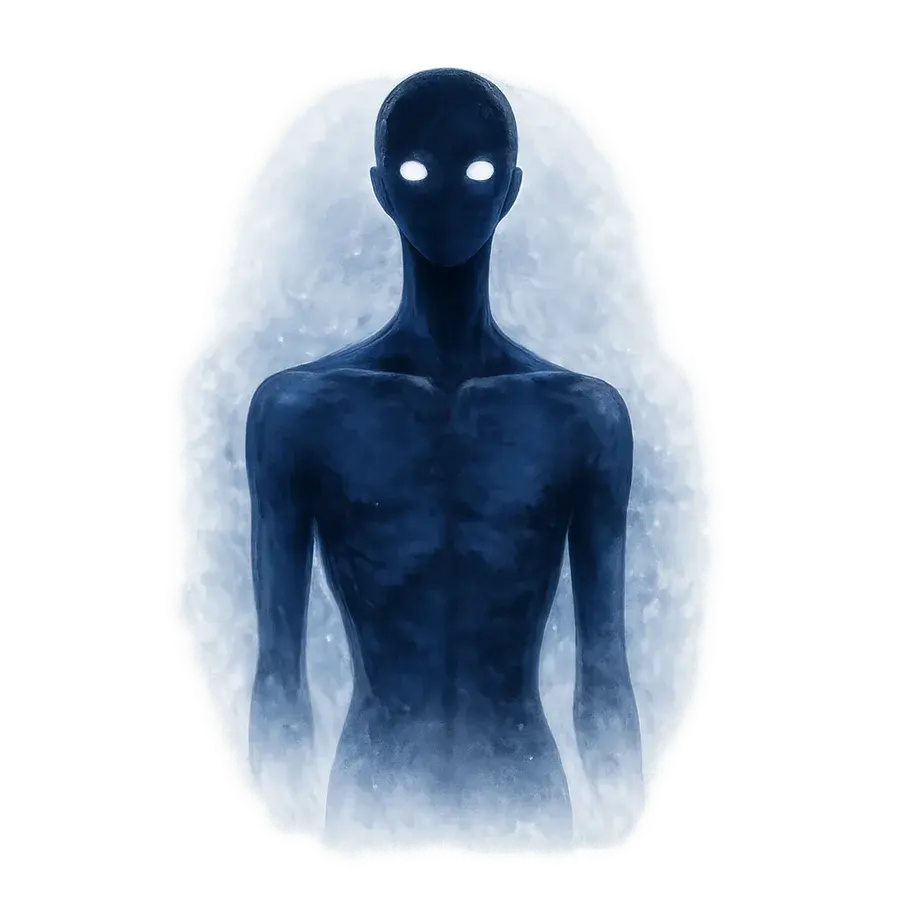
- Dream creatureThe WatcherA presence at the edge of a dream landscape (treeline, doorway, horizon) that watches and does not approach. Distinct from the bedroom presence in that it occurs inside dream narratives rather than at the sleep boundary.Emerging pattern