The Nocturnal Bestiary
The Mimic
No reports collected on this site yet. See the assessment
- Ordinary dream
- Nightmare
- Hypnopompic (waking up)
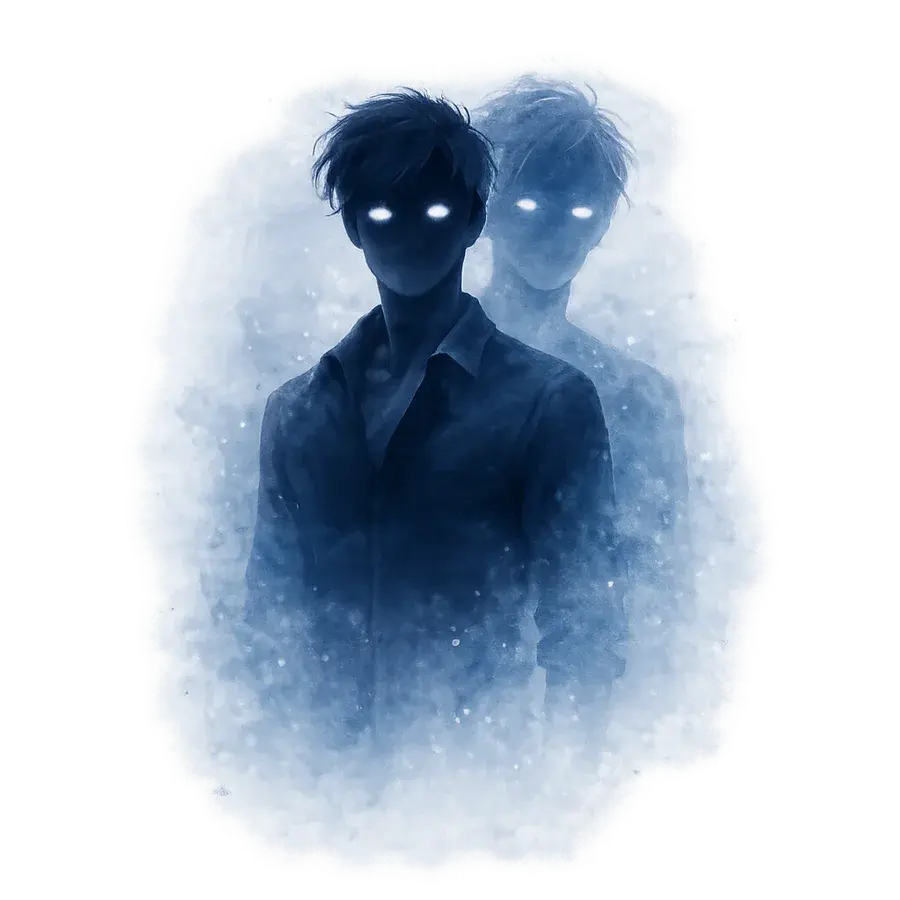
Somebody known to the dreamer who is certainly not them. Published here at the lowest useful confidence, because the description was widely available online before most of the reports and this archive will not pretend otherwise.
Also called: something wearing my friend, it looked like her but it was not, a copy of someone i know
This is an archive of what people report. A consistent description across independent reports is evidence that an experience recurs. It is not evidence that anything external exists. How this archive is built
The report is a certainty rather than a perception. A familiar person is present, looks correct, behaves nearly correctly, and the dreamer knows with total conviction that it is not them.
That conviction arrives without evidence, which is the pattern this database describes throughout and which is the strongest argument that the experience is ordinary dream construction rather than an encounter.
A small detail that is wrong is frequently reported: the eyes, the smile, the way it says a name.
Dreamers describe pretending not to have noticed, which is the same social competence the someone-who-knows-you entry records.
Editorial assessment
Confidence: internet-influenced. This is the weakest classification this archive uses that still merits publication, and the entry exists to be audited.
The case against independence is strong and the archive states it rather than burying it. The description spread widely and rapidly through online communities before the bulk of the reports appeared. The reports themselves cluster in one language and one medium. And the core experience, unearned certainty about identity, is not merely explicable by ordinary dream construction, it is predicted by it: this database documents dreams asserting identity independently of appearance in the composite person, the face and the partner entries.
So the honest reading is that a common and well-understood feature of dreaming acquired a name and a story, and the name spread. That is a real cultural phenomenon and worth an entry. It is not evidence of an entity, and this page does not present it as one.
Typical appearance
Indistinguishable from a known person, or nearly so. Where a discrepancy is reported it is small and facial. Dreamers frequently cannot say afterwards what was wrong.
Typical behaviour
Behaves as the person would, slightly off. Speaks. Does not threaten. The reports rarely contain an event: the content is the knowledge.
Where it appears
Ordinary dream settings, most often domestic and most often with the real person plausibly present. Not primarily a paralysis figure, which distinguishes it from most of this archive.
Common encounter sequence
- An ordinary dream with a familiar person in it.
- Certainty that it is not them, arriving without cause.
- Concealment of that knowledge by the dreamer.
- No confrontation, and usually no resolution.
How the dreamer feels
Dread with a social edge. Reports describe isolation, because the dreamer cannot say what they know, more than they describe fear of the figure.
Earliest traceable reports
Changeling and impostor beliefs are genuinely old and widespread, and the delusional misidentification syndromes described in clinical literature are a separate and real phenomenon. Neither is the source of the modern dream reports, which are recent in their current form.
Geographic and community spread
Reports are numerous and are overwhelmingly from English-language internet communities of the last fifteen years, which is exactly the distribution a culturally transmitted description produces. The archive treats that as evidence against independence rather than for prevalence.
Similarities and differences
Whether the figure is hostile varies and most reports say it is not, which is unusual and is worth getting down. A minority report the same experience about a place rather than a person, which is closer to the wrong-house material and is not covered here.
Common associations
- Certainty without evidence, which is ordinary dream construction.
- A known person, wrongly.
- Concealment, by the dreamer.
- A recent and traceable name.
Positive readings
The reassurance is substantial and well founded. This experience is common, it follows directly from how dream characters are built, and having it says nothing about you or about the person in it.
The composite person entry explains the mechanism at more length and is worth reading alongside.
Difficult readings
The waking residue can be unpleasant and dreamers occasionally report a lingering wariness towards a real person, which is entirely unearned and worth naming so it can be dismissed.
Psychological perspectives
Dreams assert identity as an attribute rather than deriving it from appearance, which the composite person entry sets out. That mechanism produces two people in one body, a face that does not match a name, and identity changing mid-scene without objection.
The mimic is the same mechanism with the sign flipped: the appearance is right and the identity is asserted to be wrong.
Nothing further is needed to account for it, which is the substance of the assessment above.
Cultural and historical
Changeling beliefs are old, geographically widespread and were used to explain real illness and disability in ways that caused enormous harm, which is worth stating rather than treating as picturesque folklore.
The modern online version is a distinct phenomenon with a traceable and recent spread, and the archive keeps the two apart.
What the sleep science says
Reasonably supported: dreams assert identity independently of appearance, which predicts this experience directly.
Documented separately: clinical misidentification syndromes, which are a real and different thing and are not what these reports describe.
Not established, and argued against here: any independence of the description from its online transmission.
Your own context
- How did you know it was not them?
- Was there anything actually wrong?
- Did you say anything?
- Where did you first hear of this idea?
If this recurs
Log with the composite person and face reports. The identity machinery is the pattern and it is far more interesting than the entity.
Emotions often reported
- dread
- unease
- loneliness
- alarm
- confusion
- detachment
Questions for reflection
These are for your journal, not for us. Nothing you write is shared.
- How did I know?
- Was anything actually different?
- When did I first hear of this?
Dream interpretation is subjective. Nothing here is a diagnosis, a prediction, or medical advice.
Sources and reviewed references
4 references. What these labels mean
- 1.Dreaming: A Conceptual Framework for Philosophy of Mind and Empirical ResearchAcademic book
Jennifer M. Windt (2015) · MIT Press
Cited for: A modern philosophical treatment of what dreams are, including the immersive-spatiotemporal-hallucination account and the status of dream reports as evidence.
- 2.The Scientific Study of Dreams: Neural Networks, Cognitive Development and Content AnalysisAcademic book
G. William Domhoff (2003) · American Psychological Association
Cited for: The continuity hypothesis (that dream content largely reflects waking concerns) and a sustained critique of symbolic dream interpretation as an evidential method.
- 3.Sleep Paralysis: Night-mares, Nocebos, and the Mind-Body ConnectionAcademic book
Shelley Adler (2011) · Rutgers University Press
Cited for: How culturally specific interpretations attach to a physiologically consistent sleep experience, and what happens when they do.
- 4.The Terror That Comes in the Night: An Experience-Centered Study of Supernatural Assault TraditionsAcademic book
David J. Hufford (1982) · University of Pennsylvania Press
Cited for: The central finding behind this entire archive: that the "old hag" experience shows a stable core description across cultures with no prior exposure to the tradition. That is, the experience generates the folklore rather than the other way round.
Encounters
How the mimic has actually turned up for other dreamers, in their own words. Add a drawing if you have one. A picture describes a figure in a way that the words on this page have not already shaped.
Nothing here yet. Be the first to say how this has shown up for you.
Specific encounters
The variants people report most often. Each is written from the accounts rather than composed from this page.
Related figures
- SymbolFaceFaces are the most attended thing in dream content and the least stable. A face that changes, that will not resolve, or that belongs to the wrong person is among the most reported and most unsettling experiences there is.
- PersonPartnerThe person a dreamer lives with is among the most frequent dream characters, which is exactly what the continuity finding predicts. The reports worth attention are the ones where the partner is present but wrong.
- PersonSomebody who was two peopleAlmost every dreamer has had one and almost every dreamer assumes it is peculiar to them. A person who is unmistakably two people at once, or who is one person wearing another's face, is common and follows directly from how dream characters are made.
- Dream creatureThe DoubleEncountering yourself in a dream. Reported far less often than the folklore suggests, and the genuinely striking version, a double that acts independently, is rarer still.Emerging pattern
- Dream creatureThe Bedroom PresenceThe sense that someone is standing in the room, usually in a doorway or beside the bed, reported without any visual detail. It is the most common component of sleep paralysis and one of the most frightening experiences people have.Sleep-paralysis associated
- Dream creatureThe Black DogA famous folkloric figure with a very thin dream record. Included, and marked insufficient, as a worked example of an entry that does not meet this archive's standard.Insufficiently verified